Thèmes de recherche
Agronomie globale, modélisation, agriculture biologiqueMots-clés
Fertilité du sol, azote, phosphore, cycles biogéochimiques, agriculture biologique, modélisationBio
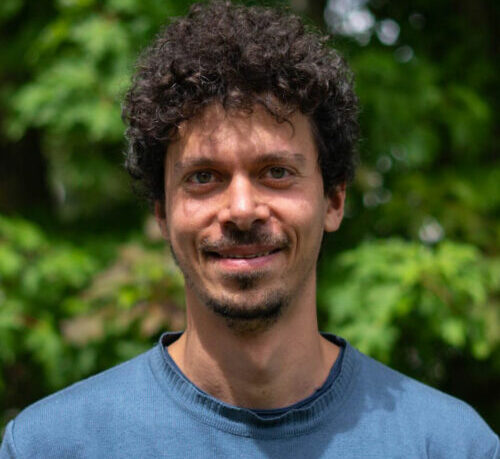
Agronome, titulaire d’un Master en Agriculture Biologique (2012) et d’un doctorat sur l’analyses des scénarios d’expansion de l’agriculture biologique à l’échelle mondiale (2018), j’ai rejoints Bordeaux Sciences Agro en 2019 comme maître de conférences en agronomie. Mes activités de recherche portent sur le fonctionnement des cycles biogéochimiques des éléments (surtout N et P) dans les systèmes agricoles en agroécologie et en agriculture biologique. Les interactions entre les composantes animales et végétales sont au sein de mes questions de recherche, avec une analyse à différentes échelles spatiales. Mes travaux mixent des approches de modalisation et d’analyse des bases de données.
Publications
2026
- Large Scale Expansion of Organic Farming at Risk of Phosphorus Limitation in the Long Run — , Global Change Biology, 2026 (Article scientifique). Lire sur HAL DOI : 10.1111/gcb.71067
- Mise au point de références pour le raisonnement de la fertilisation phosphatée des cultures en Agriculture Biologique — , Innovations Agronomiques, 2026 (Article scientifique). Lire sur HAL DOI : 10.17180/ciag-2026-vol112-art01
- Mise au point et adaptation d’indices de nutrition phosphatée pour différentes espèces de grandes cultures au contexte de l’Agriculture Biologique — , Innovations Agronomiques, 2026 (Article scientifique). Lire sur HAL DOI : 10.17180/ciag-2026-vol112-art02
- Agricultural practices modulate tree-induced changes in soil enzyme activities and nutrient availability in alley-cropping systems: a study based on fifteen on-farm sites in France — , 2026 (Communication). Lire sur HAL
2025
- Soil phosphorus budgets in organic farming differ according to plot managements and farm types — , Agronomy for Sustainable Development, 2025 (Article scientifique). Lire sur HAL DOI : 10.1007/s13593-025-01047-w
- Impact des bandes arborées intraparcellaires sur la fertilité du sol sur un réseau de parcelles en Nouvelle-Aquitaine — , 2025 (Communication). Lire sur HAL
2024
- What type of livestock farming for a successful organic agriculture in the Anthropocene era? — , INRAE Productions Animales, 2024 (Article scientifique). Lire sur HAL DOI : 10.20870/productions-animales.2024.37.2.7372
2023
- Soil organic carbon stocks potentially at risk of decline with organic farming expansion — , Nature Climate Change, 2023 (Article scientifique). Lire sur HAL DOI : 10.1038/s41558-023-01721-5
- Biological nitrogen fixation of legumes crops under organic farming as driven by cropping management: A review — , Agricultural Systems, 2023 (Article scientifique). Lire sur HAL DOI : 10.1016/j.agsy.2022.103579
- Impact of grasslands on the local nitrogen cycle — , Fourrages, 2023 (Article scientifique). Lire sur HAL
- OBSERVATOIRE PHOSPHOBIO — , 2023. Lire sur HAL
2022
- Opinion paper: Livestock is at the heart of interacting levers to reduce feed-food competition in agroecological food systems — , Animal, 2022 (Article scientifique). Lire sur HAL DOI : 10.1016/j.animal.2021.100436
- Membres du comité d’organisation scientifique. XVII. Congress of the European Society for Agronomy — , 2022 (Communication). Lire sur HAL
2021
- Food system resilience to phosphorus shortages on a telecoupled planet — , Nature Sustainability, 2021 (Article scientifique). Lire sur HAL DOI : 10.1038/s41893-021-00816-1
- Global option space for organic agriculture is delimited by nitrogen availability — , Nature Food, 2021 (Article scientifique). Lire sur HAL DOI : 10.1038/s43016-021-00276-y
- Sound methods are needed to assess GHG mitigation potential of organic farming deployment. A comment on — , Agricultural Systems, 2021 (Article scientifique). Lire sur HAL DOI : 10.1016/j.agsy.2020.102994
- Comparing productivity and feed-use efficiency between organic and conventional livestock animals — , Environmental Research Letters, 2021 (Article scientifique). Lire sur HAL DOI : 10.1088/1748-9326/abd65e
- How could livestock farming maximize organic production at a global scale? — , 2021 (Communication). Lire sur HAL
- A GLOBAL META-ANALYSIS ABOUT ORGANIC VS CONVENTIONAL LIVESTOCK PRODUCTION — , 2021 (Communication). Lire sur HAL
- How could livestock farming maximize organic production at a global scale? — , 2021 (Communication). Lire sur HAL
2020
- Une agriculture durable pour nourrir la planète: l’élevage au coeur du débat — , Innovations Agronomiques, 2020 (Article scientifique). Lire sur HAL DOI : 10.15454/zpmg-rh95
2019
- Une agriculture durable pour nourrir la planète: L’élevage au coeur du débat — , 2019 (Communication). Lire sur HAL
2018
- Can the availability of mineral nutrient be an obstacle to the development of organic agriculture at the global scale? — , 2018. Lire sur HAL
Unités de recherche et labos
UMR 1391 ISPA (Interactions Sol Plante Atmosphère)
Ecole doctorale de rattachement : Sciences et Environnements